Ever wondered what washed or honey mean? Join us to learn about processing methods

Processing Methods

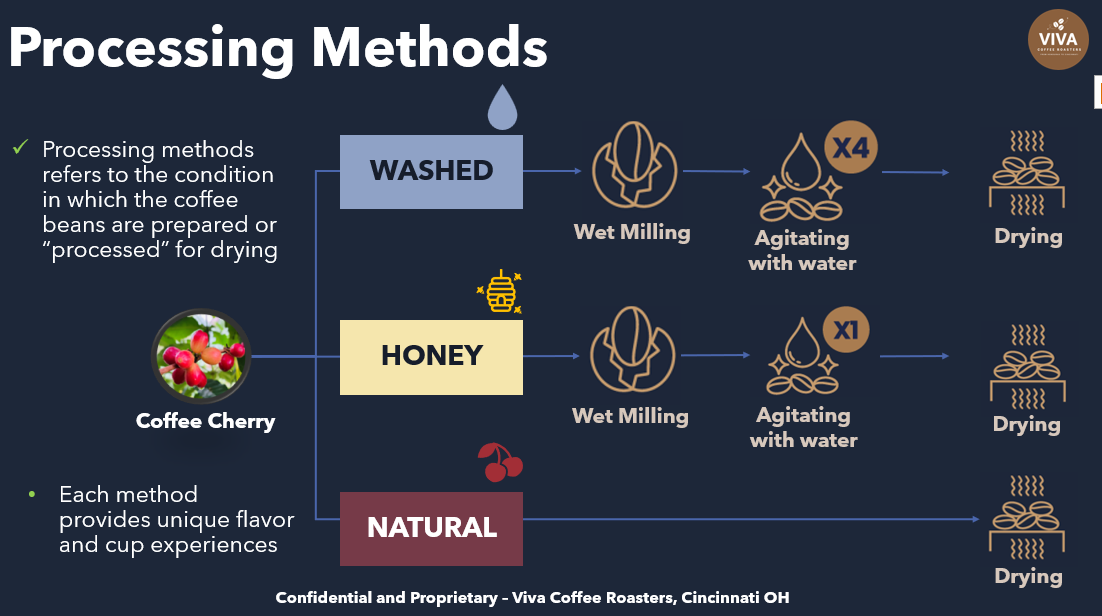
Flowchart showing processing methods for coffee using coffee cherry, including washed, honey, and natural. Washed involves wet milling, agitating with water four times, then drying. Honey involves wet milling, agitating with water once, then drying. Natural skips wet milling and drys. The chart emphasizes each method provides unique flavor and cup experience.

01

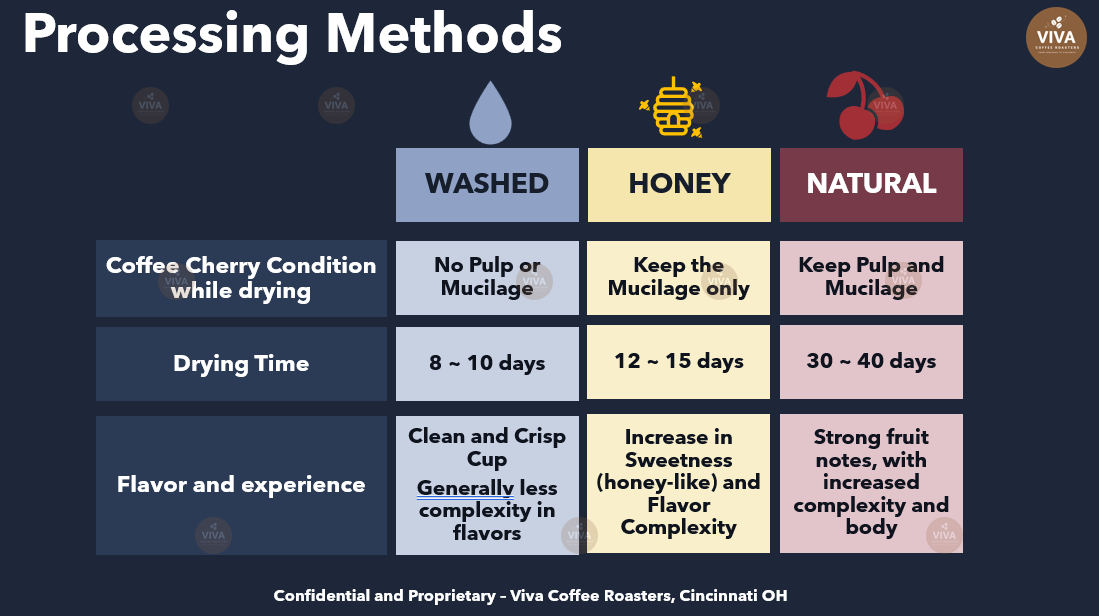
Comparison chart of coffee processing methods: washed, honey, and natural. Includes details on cherry condition, drying time, and flavor profile.

02

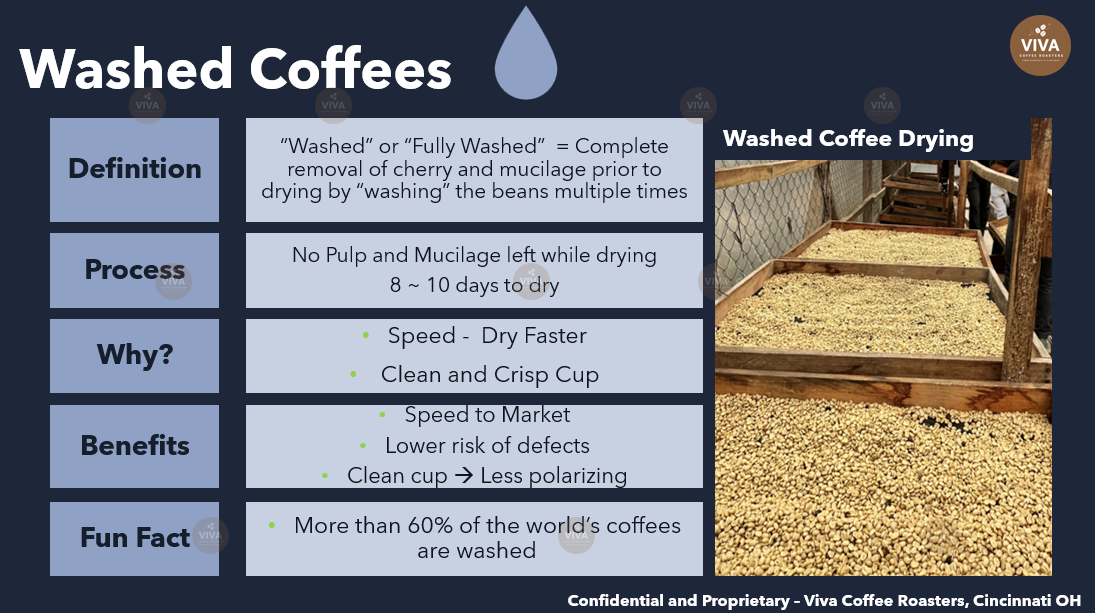
A presentation slide about washed coffee processing, showing a drying process and text explaining the definition, process, benefits, and a fact about washed coffee.

03

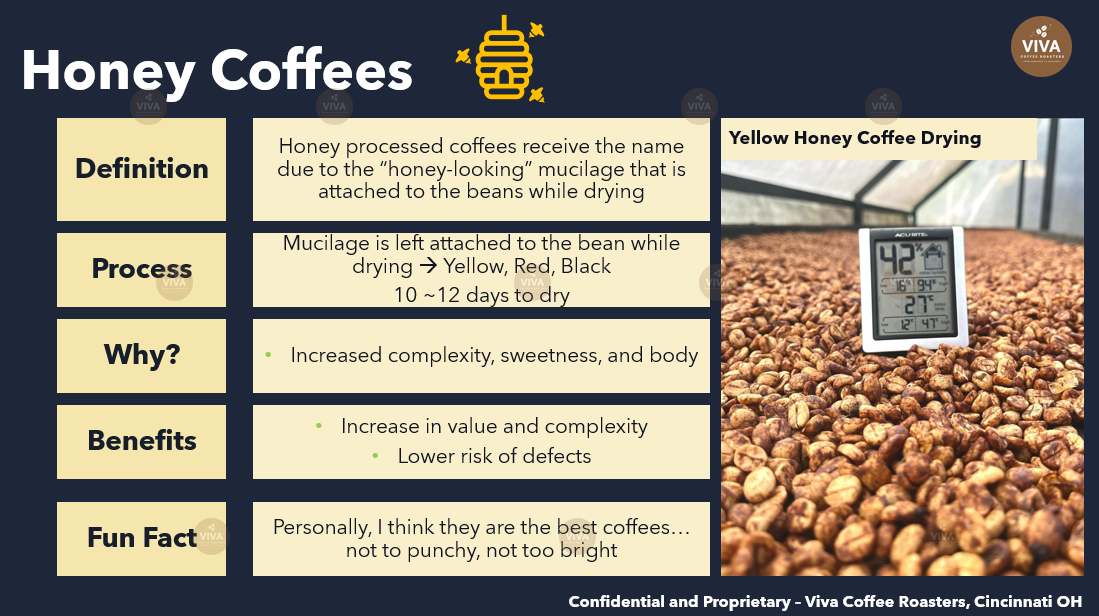
An informational graphic titled 'Honey Coffees' with sections explaining honey processed coffee, including definition, process, reasons, benefits, and a fun fact. The graphic features a small image of coffee beans with a digital thermometer showing temperature in a greenhouse environment.

04

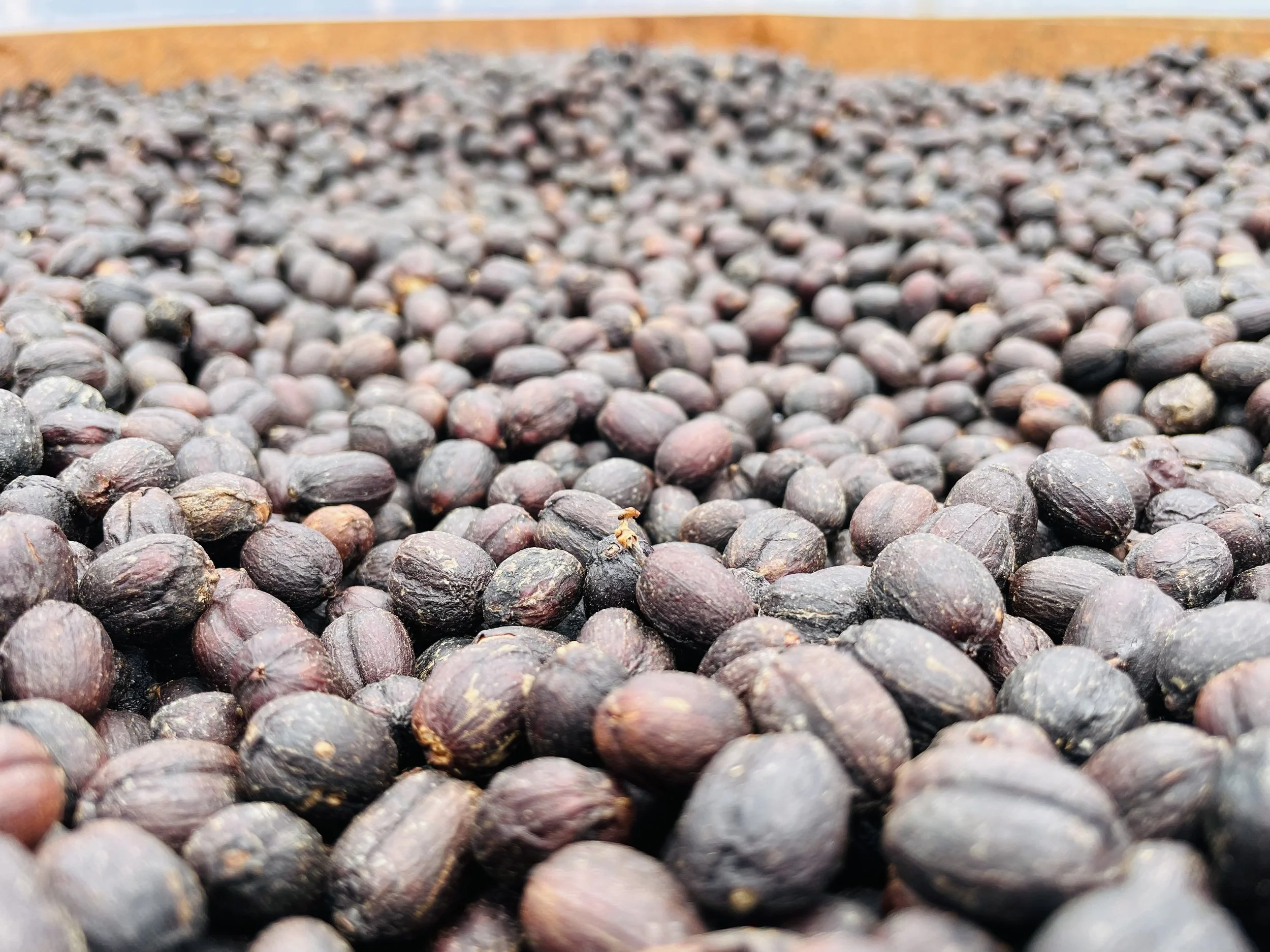
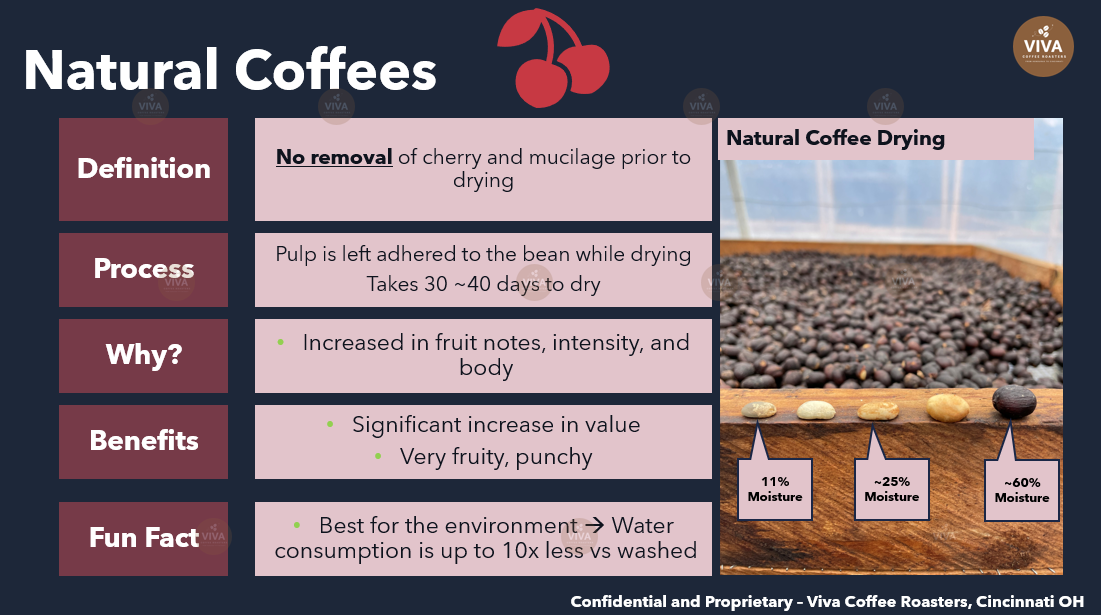
Chart explaining natural coffee drying process, showing different moisture levels and effects on coffee beans, with a photo of coffee beans drying in a greenhouse.

05

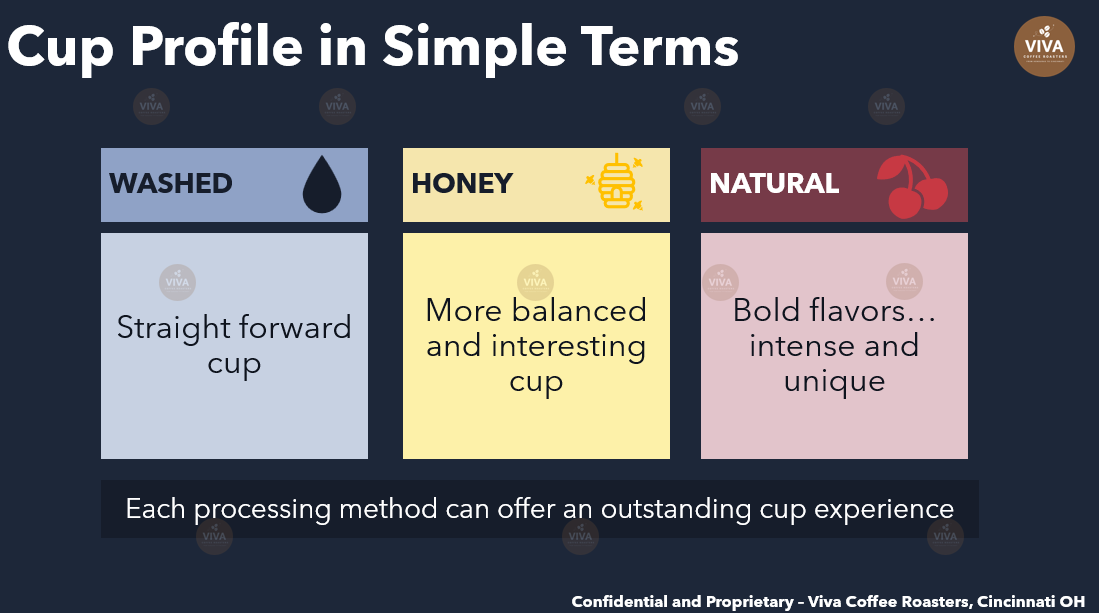
A chart titled 'Cup Profile in Simple Terms' compares three types of coffee cups: washed, honey, and natural. The washed cup is described as a 'Straight forward cup,' the honey cup as 'More balanced and interesting cup,' and the natural cup as 'Bold flavors... intense and unique.' Each type has a different color background, with icons representing each process. The chart notes that each processing method offers an outstanding cup experience.

07

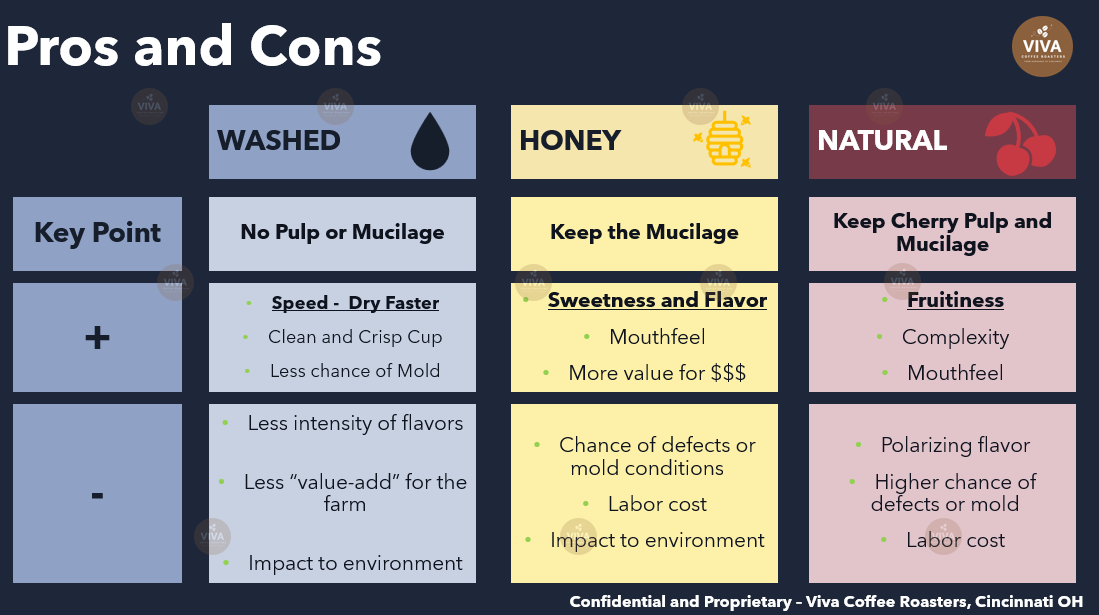
Chart comparing pros and cons of washed, honey, and natural coffee processing methods. Washed emphasizes speed, cleanliness, and less mold; honey keeps the mucilage and focuses on sweetness and flavor; natural keeps cherry pulp and mucilage, highlighting fruitiness at the cost of potential defects and higher labor.

06